
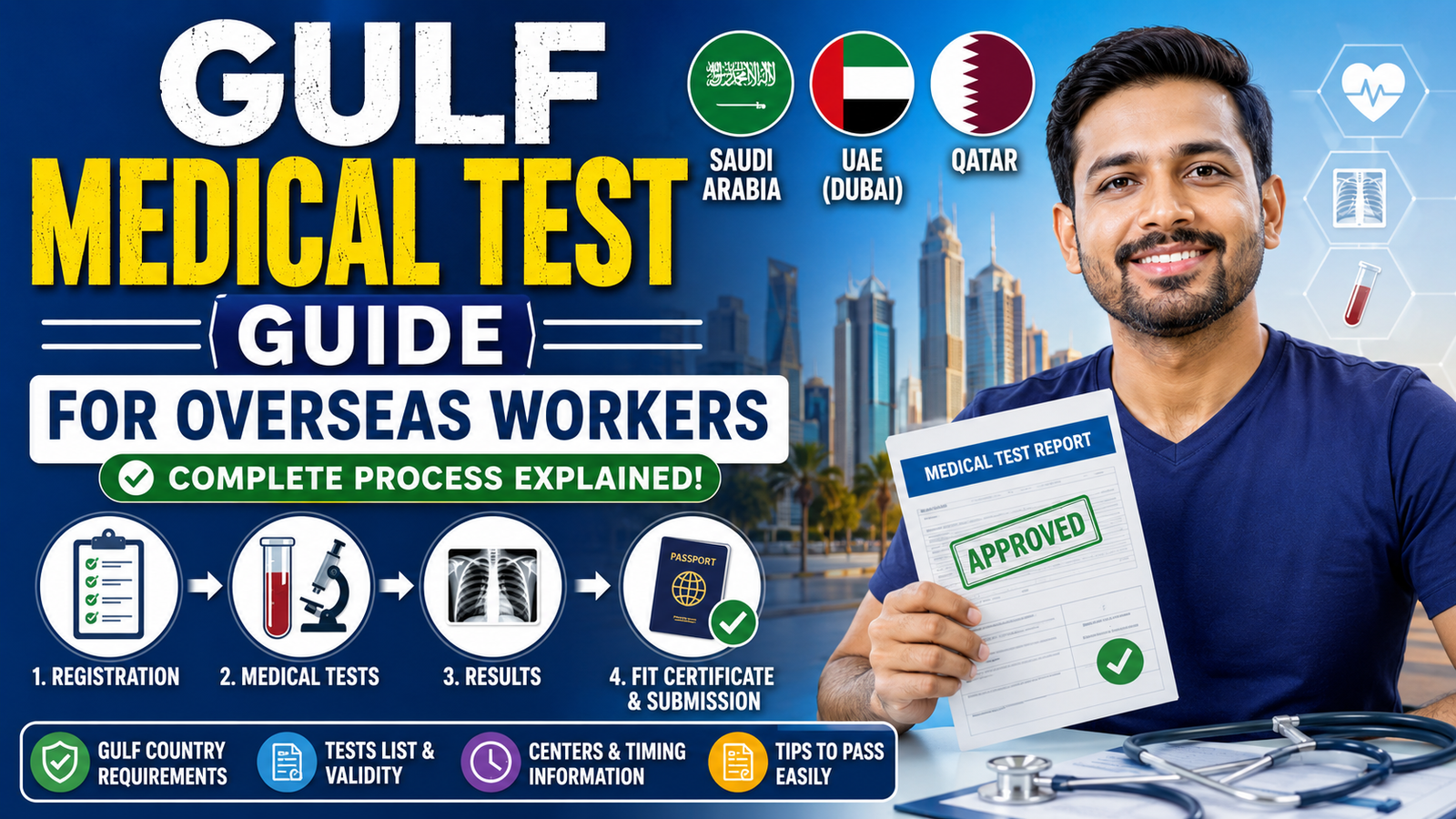
One of the most stressful parts of moving to the Gulf for work is the medical test process. Many overseas workers worry about whether they will pass, what diseases are checked, how strict Gulf countries are, and what happens if a candidate fails the medical examination.
Unfortunately, there is also a lot of misinformation online. Some people think minor health issues automatically lead to rejection, while others believe Gulf medical tests are just a simple formality. The reality is somewhere in between.
This guide explains how Gulf medical tests actually work in 2026 for workers planning to move to countries like the UAE, Saudi Arabia, Qatar, Kuwait, Bahrain, and Oman. Instead of generic information, this article focuses on practical details overseas workers should understand before starting the process.
Why Gulf Medical Tests Are Important
Gulf countries require medical testing to ensure incoming workers do not carry infectious diseases that may affect public health or workplace safety.
For many employers, medical clearance is mandatory before:
- visa approval
- work permit processing
- residency permit issuance
- employment contract activation
Without passing the medical examination, candidates usually cannot complete the overseas employment process.
When Does the Medical Test Happen?
Most overseas workers go through medical testing in two stages.
1. Pre-Departure Medical Test
This test is usually completed in the worker’s home country before visa processing or final travel approval.
In many countries, workers must visit officially approved Gulf medical centers or GAMCA/WAFID-approved clinics.
2. Medical Test After Arrival
After reaching the Gulf country, workers often complete another medical examination for:
- residency permit
- labor card
- Emirates ID processing
- Iqama approval
Even if a candidate passed testing in their home country, local Gulf authorities may still require another examination.
Which Diseases Are Usually Checked?
This is the part most workers worry about.
While medical requirements differ slightly between countries and job categories, Gulf medical tests commonly screen for:
- Tuberculosis (TB)
- HIV/AIDS
- Hepatitis B
- Hepatitis C
- Serious infectious diseases
- Drug abuse indicators
For certain professions like healthcare workers, food handlers, hotel staff, and domestic workers, testing may be stricter.
Does Every Health Problem Cause Rejection?
No. This is one of the biggest misconceptions.
Many candidates panic unnecessarily after hearing rumors online.
Minor health issues usually do not cause automatic rejection. Gulf medical systems mainly focus on infectious diseases and conditions considered serious public health concerns.
For example:
- weak eyesight usually does not fail a worker
- minor blood pressure issues may not matter
- old injuries often do not affect approval
- general weakness is not normally a rejection reason
However, serious infectious conditions may affect eligibility depending on country regulations and job category.
What Happens During the Medical Test?
The actual testing process is usually faster than many people expect.
Most workers go through:
- blood testing
- chest X-ray
- general physical examination
- identity verification
In some cases, urine testing may also be included.
The entire process often finishes within a few hours, although report timing varies by country and clinic workload.
Understanding the Chest X-Ray Process
Many Gulf workers fear the chest X-ray because of tuberculosis screening.
Medical authorities carefully examine lungs for signs of active TB or suspicious abnormalities.
This is why candidates with previous TB history often become anxious during the process.
However, every scar or old infection does not automatically mean rejection. Medical decisions depend on:
- current infection status
- active vs inactive disease
- country regulations
- specialist review
Candidates with medical history concerns should avoid relying only on social media rumors and instead seek proper medical advice before applying abroad.
How Strict Are UAE Medical Tests?
The UAE remains one of the most popular destinations for overseas workers, especially in Dubai and Abu Dhabi.
Medical testing in the UAE is generally organized and highly digitized.
Workers in sectors like:
- hospitality
- food handling
- cleaning services
- healthcare
- domestic work
may face more detailed screening because these jobs involve public interaction.
Candidates applying for hospitality roles like hotel storekeeping, housekeeping, or warehouse jobs should understand that employers may also expect overall fitness for physically demanding work.
If you are planning warehouse or inventory-related work, you can also read our detailed guide on
real storekeeper salaries in Dubai, Saudi Arabia, and Qatar
to better understand the Gulf job market.
Saudi Arabia Medical Testing System
Saudi Arabia follows strict medical screening rules, especially for workers arriving through overseas recruitment systems.
In many countries, Saudi-bound workers must complete testing through approved WAFID/GAMCA medical centers before visa stamping.
Saudi authorities place strong focus on:
- infectious disease screening
- identity verification
- official medical approvals
Workers in construction, logistics, hospitality, and industrial sectors often complete large-scale recruitment medical processing.
Qatar Medical Testing Process
Qatar’s process is generally similar to other Gulf countries, although procedures may vary depending on:
- employer category
- residency type
- job role
- visa sponsorship
Candidates often undergo testing after arrival during residency permit processing.
Large companies may assist workers throughout the process, while smaller employers sometimes expect candidates to handle parts of the paperwork independently.
Biggest Mistakes Overseas Workers Make
Ignoring Official Medical Centers
Some candidates attempt shortcuts or unofficial medical routes. This can create serious visa problems later.
Always use approved medical centers recognized for Gulf processing.
Believing Agent Rumors
Many agents spread false information to create fear or pressure candidates into paying extra fees.
Candidates should verify information through official Gulf medical systems whenever possible.
Hiding Medical History
Trying to hide serious medical conditions can create bigger problems during final processing.
Waiting Until the Last Minute
Medical clearance delays can affect visa timelines and travel schedules.
Can Candidates Reapply After Failing?
This depends entirely on:
- the medical issue involved
- country regulations
- future treatment results
- official Gulf rules
Some temporary issues may allow future reapplication after treatment or recovery. However, certain infectious conditions may permanently affect eligibility in specific Gulf countries.
How Long Are Gulf Medical Results Valid?
Medical validity periods vary depending on:
- country
- visa category
- employer timeline
In many cases, reports remain valid for only a limited period. Delays in visa processing or travel may require retesting.
What Overseas Workers Should Do Before the Test
Many workers ask how they can “prepare” for the Gulf medical test.
There is no magic shortcut, but practical preparation helps reduce unnecessary stress.
Candidates should:
- sleep properly before testing
- avoid fake medicines or shortcuts
- carry valid identification documents
- drink enough water
- follow clinic instructions carefully
- avoid relying on social media myths
Do Gulf Medical Rules Change?
Yes. Gulf medical policies can change over time depending on:
- public health regulations
- visa policies
- labor system changes
- country-specific requirements
This is why workers should always verify current requirements before beginning the process.
Mental Pressure & Fear Around Medical Testing
Many first-time overseas workers become extremely anxious during the medical stage. For some candidates, the fear comes from hearing stories online or from other workers.
In reality, thousands of workers successfully pass Gulf medical tests every day.
The best approach is:
- stay calm
- avoid misinformation
- follow official procedures
- prepare documents properly
- focus on facts instead of rumors
How Gulf Employers View Medical Fitness
Employers are not only concerned about disease screening. They also want workers physically capable of handling job responsibilities.
For example:
- warehouse workers may handle lifting tasks
- hotel staff may work long standing hours
- construction workers face physically demanding environments
- drivers require proper eyesight and alertness
This is why overall health and fitness still matter even beyond infectious disease testing.
Final Thoughts
The Gulf medical test process may seem intimidating at first, especially for first-time overseas workers. However, understanding the real process helps reduce unnecessary fear and confusion.
Most medical testing focuses on public health protection and legal residency requirements rather than minor personal health issues.
Candidates who follow official procedures, avoid fake shortcuts, and stay informed usually complete the process without major problems.
As Gulf hiring continues growing across hospitality, logistics, retail, construction, and warehouse sectors in 2026, understanding the medical process has become an important part of preparing for overseas employment successfully.